Kitesurfing in Tarifa: Schools, Lessons, Wind and Season Guide
There are windier places in the world. There are warmer ones, cheaper ones, more exotic ones. But Tarifa has a combination of qualities that has made it the kitesurfing capital of Europe for over two decades: the consistency of the wind, the variety of the beaches, the quality of the schools and the character of the town itself. Here is what you need to know before you arrive.
Why Tarifa?
The Strait of Gibraltar is a natural wind tunnel. Two large bodies of water, the Mediterranean and the Atlantic, meet at a narrow channel barely fourteen kilometres wide, with mountain ranges on both sides funnelling the air through at speed. This geography produces two dominant winds: the Levante, which blows from the east across North Africa, and the Poniente, which comes off the Atlantic from the west.
Because they alternate in a rough cycle, Tarifa has reliable wind on the vast majority of days across a very long season. When the Levante drops, the Poniente often follows within a day or two. Experienced riders plan their sessions around the forecast; beginners quickly learn the difference between them (the Levante blows offshore on some beaches and onshore on others, depending on orientation; your school will brief you on this).
Wind by Month: When to Go
Understanding the wind calendar is the single most useful preparation for a Tarifa kite trip. The table below gives a practical overview of what to expect across the year.
| Month | Typical wind (knots) | Dominant wind | Best for | Crowds |
|---|---|---|---|---|
| January | 15–30 | Variable | Advanced, uncrowded sessions | Very low |
| February | 15–28 | Variable | Advanced, winter Levante | Very low |
| March | 18–30 | Levante building | Intermediate and above | Low |
| April | 20–32 | Levante/Poniente mix | All levels | Low |
| May | 22–35 | Levante | All levels, excellent conditions | Medium |
| June | 25–38 | Strong Levante | All levels, peak season beginning | Medium–high |
| July | 28–40 | Very strong Levante | Intermediate to advanced; beginners on calm mornings | High |
| August | 28–40 | Very strong Levante | Intermediate to advanced | Very high |
| September | 22–35 | Strong Levante | All levels, summer feel with fewer crowds | Medium |
| October | 18–28 | Easing Levante | All levels, excellent shoulder season | Low–medium |
| November | 15–30 | Variable | Advanced; quieter, unpredictable | Very low |
| December | 15–35 | Variable, storms | Advanced, committed riders | Very low |
The sweet spot for most visitors is May, June, September and October. The wind is reliable, the beaches are not at capacity, prices are lower than the August peak, and the range of conditions suits all levels. July and August are peak season: guaranteed wind, but also guaranteed crowds on the kite beaches.
See our month-by-month guide to visiting Tarifa for more on weather, temperature and what else is happening across the year.
The Beaches
Los Lances is the main beach: a long stretch of sand running north from the old town. Wide, accessible, and the hub of most kitesurfing activity, it works in both Levante and Poniente conditions. Outside the summer months, the Poniente blows onshore here, meaning riders can launch and land directly on the beach right next to town. The focal point is Chiringuito Agua, the most popular beginner spot on Los Lances and where most schools set up. In summer it takes on a life of its own at dusk: live music, cold drinks, and the beach gradually winding down from the day's sessions as the sun drops behind the sand dunes of Punta Paloma.
Valdevaqueros is a few kilometres further north, where the beach widens into a great arc of pale dunes. Many riders consider it the best spot in Tarifa: more space, reliable Levante conditions, and a distinctive kicker where the wind accelerates around the headland. The beach bar here is Bora (formerly known as Tumbao), hugely popular with experienced riders and with a large grassy chill-out area behind the dunes that makes it a natural gathering point after sessions.
Punta Paloma is the most spectacular setting: a wild beach backed by enormous sand dunes that are part of the Parque Natural del Estrecho. More remote, more beautiful, and best suited to intermediate and advanced riders.
For more on each beach and the full coastal picture, see our guide to the best beaches near Tarifa.
Kitesurfing Schools in Tarifa
Tarifa has over a dozen kitesurfing schools, with quality generally high. Several have been operating for fifteen to twenty years. The teaching methodology is well established: trainer kite work on the beach first, then body dragging in the water, then board work — progressing only when each stage is solid. A first-time rider can expect to have the fundamentals within ten to fifteen hours of instruction.
Established schools
Tarifa Max is our top recommendation. Based on Los Lances, Tarifa Max combines a highly personal teaching approach with IKO-certified instruction and excellent equipment. Highly rated by students, and well suited to beginners wanting focused progression and to intermediate riders looking to consolidate. English-speaking instructors.
KTS is one of the original kitesurfing schools in Tarifa and the name most locals and returning riders know it by. It maintains a high standard of teaching, and has a shop in town where you can buy new and second-hand gear — useful if you catch the kite bug and want to start building your own kit without paying full new prices.
Freeride Tarifa is one of the oldest and most respected schools on the beach at Los Lances. IKO-certified, with a strong record for beginner tuition and a large fleet of well-maintained equipment. Courses in English and Spanish.
Tornado Kite School operates from Los Lances and is well regarded for its structured teaching progression and small group sizes. IKO certification, lessons for all levels from complete beginners to advanced coaching.
ION CLUB is an international operator with a site at Valdevaqueros. Their model (standardised training, consistent equipment, multilingual instructors) suits those who want a structured, reliably delivered experience. Good for those coming from another ION CLUB destination with some prior experience.
What to look for
When choosing a school, the key things to check:
- IKO or VDWS certification — both are internationally recognised and indicate a proper safety and teaching standard
- Radio instruction — the best schools equip students with waterproof radio receivers so the instructor can coach from the beach in real time while you are on the water. It makes a significant difference to how quickly you progress
- Student-to-instructor ratio — no more than 2:1 for beginners is the standard
- Honest level assessment — a school that moves you on before you are ready is a safety risk
- Equipment condition — kites, bars and boards should be well maintained and current
Gear rental is available at most schools. If you are bringing your own equipment, there are rigging areas at both Los Lances and Valdevaqueros.
How Much Does It Cost?
A complete breakdown of what to budget for a kite trip to Tarifa.
| What | Cost |
|---|---|
| Beginner group lesson (2–3 hours) | €60–90 |
| Full beginner course (9–12 hours) | €300–450 |
| Private instruction (per hour) | €80–120 |
| Intermediate coaching session (half day) | €100–150 |
| Equipment hire (full day, own kite skills) | €80–120 |
| Kite only hire (per day) | €50–70 |
| Board and harness hire (per day) | €30–40 |
| Wing foil beginner lesson (2–3 hours) | €60–90 |
Notes on pricing: Most schools include all equipment in lesson prices — kite, board, harness, wetsuit and helmet. Private instruction is worth considering if you want to progress faster than a group pace allows. Prices are broadly consistent across schools, with small variations. July and August rates may be slightly higher than shoulder-season rates.
To learn to kitesurf in a week: A realistic week's budget for someone starting from zero is €400–500 for a full beginner course, plus equipment hire for two or three independent sessions once you have the basics. That is typically enough to get from complete beginner to riding upwind by the end of the week in good conditions.
What Level Do You Need?
Beginners: Tarifa is a great place to learn, but the conditions are genuinely challenging. There is no shallow, sheltered water to ease you in: the Atlantic here is deep right from the shore, which means body dragging properly is not optional. Schools spend real time on this for good reason. The upside is that learning in Tarifa sets you up well for almost any other kite spot in the world. Riders who learned here find softer conditions elsewhere far more manageable. Expect 10–15 hours of instruction to have the fundamentals.
Advanced riders: Tarifa punches well above its weight at the top end of the sport. The town is home to an unusually high number of world champions, drawn by the consistency and variety of conditions across a long season. Freestyle riders come for the flat water at Los Lances; big air riders for the Levante chop at Valdevaqueros; wave riders for Punta Paloma in the right swell. Tarifa is also a base for crossing to Morocco for sessions on the other side of the Strait.
Wing Foiling in Tarifa
Wing foiling has arrived in Tarifa in a serious way over the past few years. Several established kitesurfing schools now offer wing foil lessons and equipment rental alongside their kite programmes, and the beach at Los Lances has become a regular sight of wings in the air on lighter wind days.
The same conditions that suit kitesurfing make Tarifa excellent for wing foiling, though the disciplines have different sweet spots. Wing foiling works well in lighter winds (12–18 knots) where kitesurfing can feel underpowered, which means Poniente days that kite riders consider borderline are often ideal for foilers. In stronger Levante conditions, experienced wing foilers can generate serious speed and height.
If you want to try wing foiling for the first time, the IKO and VDWS schools in Tarifa offer beginner courses, and the learning curve (particularly for those with existing board sport experience) is often faster than kitesurfing. A board sport background (surfing, snowboarding, skateboarding) is a genuine advantage.
Practicalities
Getting there: Málaga airport is the most convenient arrival point, around 90 minutes' drive. Gibraltar airport is 45 minutes away but has limited connections. See our guide to getting to Tarifa for detail on all four airports, drive times and car hire.
Gear: Bring a 4/3 wetsuit for the shoulder months; a shortie or boardshorts for July and August. The Atlantic keeps water temperatures moderate even in summer, cooler than you might expect, which is part of what makes Tarifa a relief from the heat of inland Spain.
Forecast apps: Windguru is the go-to tool for accurate short-range forecasts in Tarifa. The WRF 3 model, Campo de Fútbol station is widely regarded as the most reliable for local conditions. The Strait creates its own microclimate, and the local forecast can differ significantly from the wider Cádiz or Algeciras data; always use a Tarifa-specific station rather than the regional one. Windy and WindFinder are useful for a longer-range overview and for visualising wind across the Strait.
Rigging areas: Equipment can be rigged at the designated areas at the southern end of Los Lances (near the town) and at Valdevaqueros. Do not rig on the pedestrian promenade or in areas marked as restricted — there are rules about kite proximity to swimmers and the exclusion zones are enforced in peak season.
Rescue cover: Both Los Lances and Valdevaqueros have rescue boats operating during Levante conditions. Rescue cards (a membership scheme that covers you for water rescue) can be purchased in town and at most chiringuito beach bars. If you are kiting independently rather than with a school, buying a rescue card before you get on the water is strongly recommended.
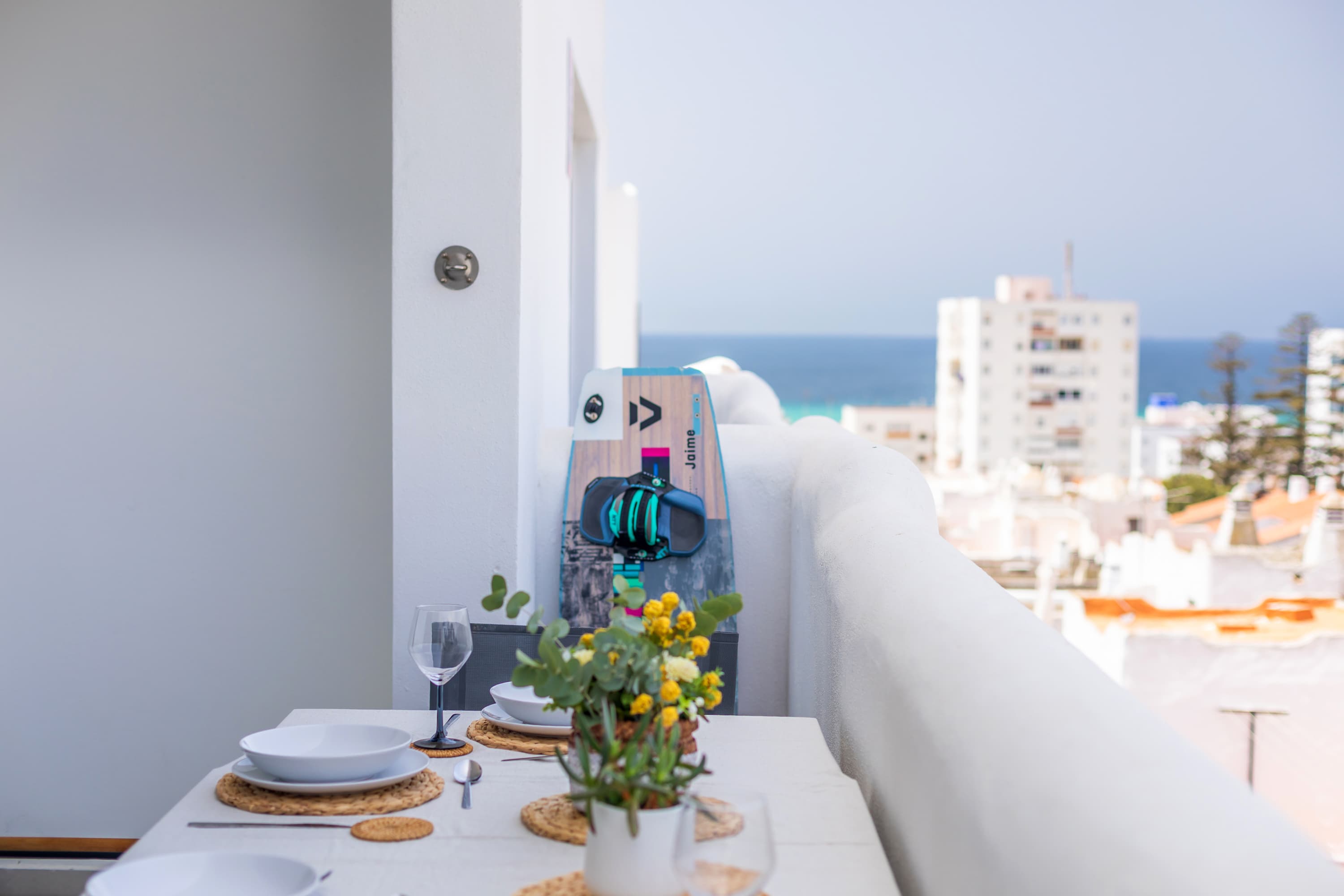
Terraza Atlántica is just a few minutes' walk from Los Lances beach, with two Atlantic-facing terraces where you can watch the kite-dotted horizon from above, and a rear terrace facing south toward Africa across the Strait. After a session on the water, the view is hard to improve on. We particularly welcome longer stays from riders and remote workers who want to experience the off-season: quiet beaches, uncrowded sessions, and the same wind without the August crowds. Long-stay rates are available on request. Check availability.
Frequently Asked Questions
Is Tarifa good for kitesurfing?
Tarifa is widely considered the kitesurfing capital of Europe. The Strait of Gibraltar creates a natural wind tunnel producing reliable wind on the vast majority of days across a very long season. The infrastructure (schools, gear rental, rigging areas) is excellent.
What is the best time to kitesurf in Tarifa?
July and August offer the most consistent Levante conditions. May, June, September and October are the sweet spot: reliable wind, fewer crowds, better prices. Winter is quieter but still good, and the beaches are empty.
Can beginners learn to kitesurf in Tarifa?
Yes. It is one of the best places in the world to learn. The schools have taught thousands of beginners, and the combination of reliable wind, long flat beaches, and high instructor quality makes it ideal. A first-time rider can expect to have the fundamentals within 10–15 hours.
How much do kitesurfing lessons cost in Tarifa?
Beginner group lessons typically cost €60–90 per session (2–3 hours). A full beginner course of 9–12 hours costs approximately €300–450 including equipment. Private instruction costs €80–120 per hour.
Which kitesurfing school should I use in Tarifa?
Tarifa Max is our top recommendation: IKO-certified, English-speaking, highly rated by students, and well suited to beginners and intermediates. Freeride Tarifa, Tornado Kite School, and ION CLUB are also well-established options. Look for IKO or VDWS certification and small group sizes, and check recent reviews before booking.
Can you do wing foiling in Tarifa?
Yes. Wing foiling has grown rapidly and several schools now offer lessons and rental. Lighter Poniente days that kite riders find marginal are often ideal for wing foiling, making it a good complement to a kite-focused trip.
What is the Levante wind?
The Levante is the east wind that blows through the Strait: consistent, powerful, and the wind that defines Tarifa's reputation. The Poniente is the west wind, softer and more variable, and generally better for beginners and wing foilers.
Come and see for yourself.
The terrace faces south. Africa on the horizon.