The Almadraba: Tarifa's Ancient Bluefin Hunt
Every spring, as the water warms and the Levante settles, something remarkable happens in the waters off Tarifa. Tens of thousands of Atlantic bluefin tuna, some weighing over 300 kilograms, funnel through the Strait of Gibraltar on their annual migration from the cold Atlantic to spawn in the warm Mediterranean. For over three thousand years, the people of this narrow strip of land have been waiting for them.
A Trap Older Than Rome
The Almadraba is not a fishing boat or a rod. It is a labyrinth of nets, kilometres of them, anchored to the seabed in a configuration refined over millennia. The tuna, following instinct along the coast, swim into the outer chambers. As the days pass, the fishermen slowly draw the nets in, herding the fish through progressively smaller enclosures until, in a climactic event known as the levantá, the innermost chamber is raised to the surface.
The technique was perfected by the Phoenicians, adopted by the Romans (who built salting factories, cetariae, all along this coast), inherited by the Moors, and passed down through the Spanish dukes who controlled the Strait for centuries. Today it is practised in just four locations in Spain: Barbate, Conil, Zahara de los Atunes, and Tarifa. Each spring, when the nets go out, the whole town holds its breath.
Tuna Like You've Never Tasted
The Almadraba bluefin is categorically different from the farmed tuna you find anywhere else. These fish have swum thousands of miles across the Atlantic, building extraordinary reserves of fat. The ventresca, the belly, is so rich it practically dissolves on the tongue. The morrillo (the neck) and ijada (the flank) are equally extraordinary, each with a distinct texture and depth of flavour that makes the most celebrated Japanese tuna look pale by comparison.
Tarifa's restaurants celebrate the catch from April through June. Look for atún de almadraba on the menu. It signals the wild, seasonal, trap-caught fish rather than a farmed substitute.
Where to eat it in Tarifa:
- El Francés: consistently excellent across the full range of cuts
- La Pescadería: tucked in the old town, simple and honest
- Souk: for a more creative interpretation of the season's catch
The Big Fish
A short walk from the old town, down towards the beach near the Castillo de Santa Catalina, stands Tarifa's most beloved landmark: a large iron sculpture of a bluefin tuna. The Almadraba is so central to the town's identity that the fish became its symbol, a reminder that long before kite surfing and tourism, it was the tuna that sustained this place.
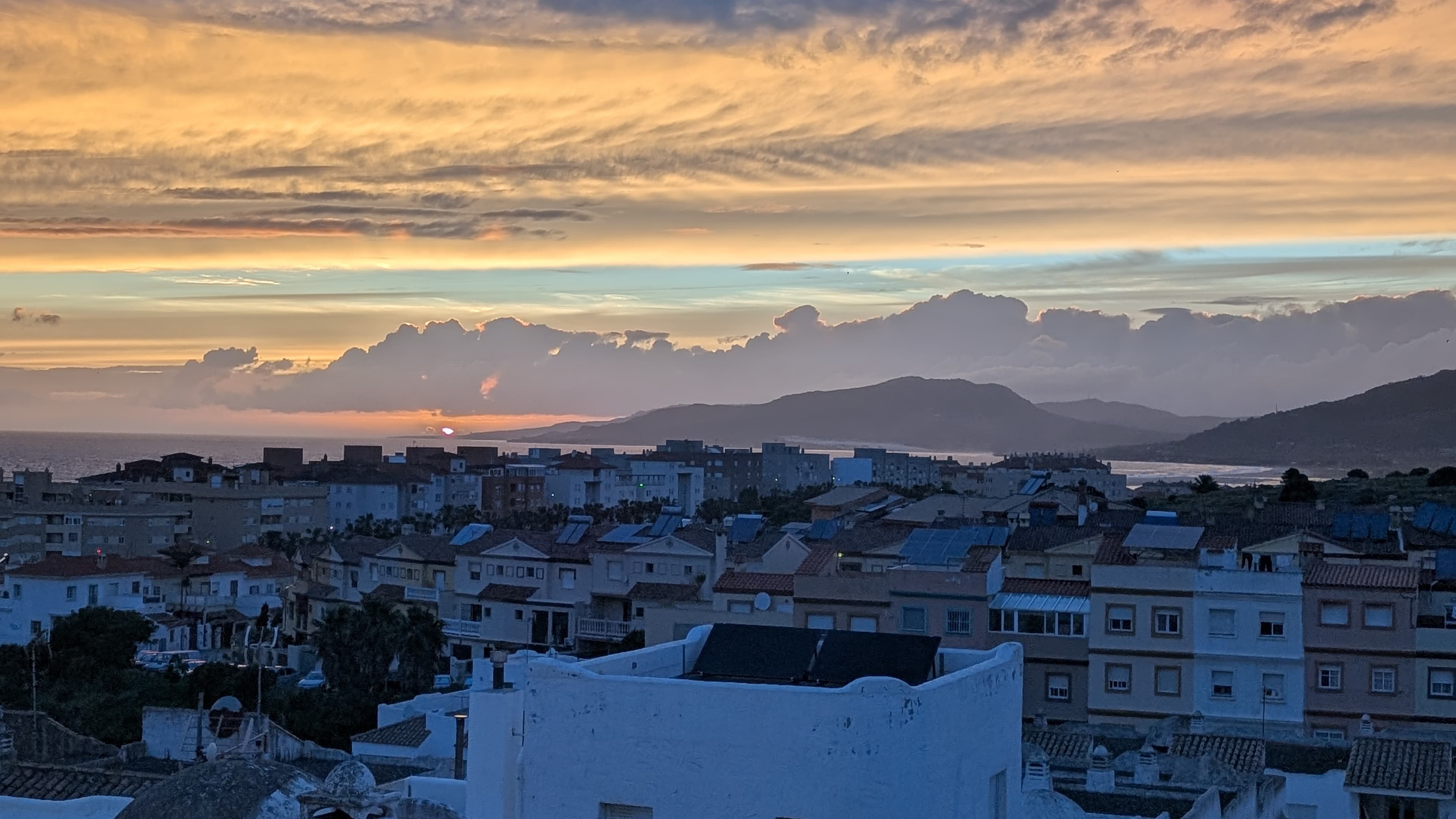
From the apartment's upper terrace, on a clear morning, you can see Africa across the Strait, the same stretch of water the bluefin cross on their migration every spring. If you visit between April and June, ask at any fishmonger about the fresco de almadraba. What ends up on your plate that evening will be among the finest things you eat this year.
Come and see for yourself.
The terrace faces south. Africa on the horizon.