Is Tarifa Worth Visiting? An Honest Guide
Tarifa has a reputation problem, or perhaps an image problem. Ask someone who hasn't been and they'll tell you it's a kitesurfing town, that the wind never stops, that it's a bit rough around the edges, that there's not much to do if you don't windsurf. All of this is partly true and mostly wrong. The people who actually know Tarifa, who have spent time here, eaten in the old town restaurants, walked the beaches, watched Africa emerge from the morning haze, tend to feel something quite different about the place.
So: is it worth visiting? The honest answer is yes. Here is why, and here is what to know before you come.
What Tarifa Actually Is
Tarifa is the southernmost point of continental Europe. It sits at the exact meeting point of the Atlantic Ocean and the Mediterranean Sea, on a narrow strait just fourteen kilometres from Africa. This geography is not merely a selling point. It shapes everything about the town: the food (the finest bluefin tuna in the world migrates through these waters each spring), the wildlife (whale watching here is among the best in Europe), the culture (eight centuries of Moorish occupation left a character that feels nothing like northern Andalusia), and the light, which is extraordinary.
The old town is genuinely beautiful: whitewashed, compact, and almost entirely pedestrianised. The fortified walls, the narrow streets, the Castillo de Santa Catalina at the tip of the promontory. It has the quality of a place that has never tried very hard to attract tourists, which means that it has preserved something the more polished Andalusian towns have lost.
What About the Wind?
The wind is real. Tarifa has two dominant winds: the Levante from the east and the Poniente from the west. They blow for a significant portion of the year. This is why kitesurfers discovered the place, and it is the source of the town's outsized reputation.
But here is what the reputation misses: the wind is also the reason Tarifa is comfortable in July and August when the rest of inland Spain is brutal. While Seville and Córdoba bake in 45°C heat, Tarifa sits in a cooling Atlantic breeze that makes summer genuinely pleasant. People increasingly come here specifically to escape the heat. The town fills in August with Spaniards from Madrid and beyond, seeking exactly that relief.
It is also worth knowing that the wind is not constant. There are calm days, particularly in spring and early summer. And even on windier days, a sheltered terrace or the narrow streets of the old town are perfectly comfortable.
The Food
This is perhaps Tarifa's most underrated quality. The pescaíto frito, mixed fried fish in the Cádiz tradition, is some of the finest in Spain. The Almadraba bluefin tuna, available in the restaurants from April to June, is a genuinely world-class ingredient, eaten with a simplicity that lets the fish speak for itself. The tortillitas de camarones, coquinas, and fresh boquerones that fill the tapas menus are outstanding.
The restaurant scene is small but considered. A town of this size should not have this quality of food. It does.
Who Is Tarifa For?
Almost everyone, if approached with the right expectations. It is excellent for:
- Water sports enthusiasts: kitesurfing, windsurfing, wing foiling, surfing. The infrastructure is world-class.
- Nature and wildlife lovers: whale watching, bird migration (Tarifa is the primary raptor crossing point between Europe and Africa), and the Los Alcornocales Natural Park on the doorstep.
- People who want to see Morocco without staying overnight: the ferry to Tangier takes thirty-five minutes. Africa is a morning's trip.
- Yoga, wellness and holistic travellers: Tarifa has become one of southern Europe's leading destinations for mindfulness and holistic practice. The concentration of yoga studios, Pilates teachers, breathwork facilitators, meditation retreats and sound healers is remarkable for a town of this size. Drop-in classes, week-long retreats and everything in between are available year-round. The town's spiritual reputation is not new: Paulo Coelho set the opening of The Alchemist here, and the mystique the novel evokes is real. Tarifa is where two oceans meet, two continents face each other across fourteen kilometres of open water, and two winds divide the sky. Many visitors describe a particular energy here that is difficult to name but hard to ignore: a sense of standing at a threshold, between worlds, between elements. Whether you seek that out or simply stumble into it, it tends to leave an impression.
- Digital nomads and remote workers: Tarifa has become a well-kept secret among location-independent workers. The town has excellent cafés with reliable Wi-Fi, a walkable centre, and an atmosphere that somehow makes it easier to think. Many people arrive for a few days and quietly extend their stay: first a week, then a month, then the whole season. A common worry before arriving is professional isolation. Most people discover the opposite. The cafés here are full of remote workers employed by some of the world's most recognisable companies: tech, finance, media, creative. The community is international, switched-on, and easy to connect with. A growing number of apartments are set up for longer stays, and the combination of productive mornings, outdoor afternoons and a high-quality social scene makes Tarifa one of the more liveable remote-work bases in southern Europe.
It is probably not ideal for anyone seeking luxury shopping or the kind of resort infrastructure that comes with package tourism. Tarifa has resisted most of that. But anyone who writes it off as a nightlife destination is mistaken. In summer, the town buzzes, and a handful of clubs deliver a genuinely great night out. The chiringuitos on the beaches a short taxi ride from town frequently host parties that go well into the early hours, with the sound of the Atlantic behind them.
The Practical Reality
Getting here requires a little effort. Málaga airport is the nearest major hub, about 90 minutes' drive away. There is no train station. The town itself is entirely walkable once you arrive, and the beaches are just outside the centre, five minutes on foot.
Accommodation ranges from hostels and simple apartments to a handful of boutique options with genuine character. Self-catering makes particular sense here, given the quality of the local markets and the pleasure of cooking the fish you bought that morning.
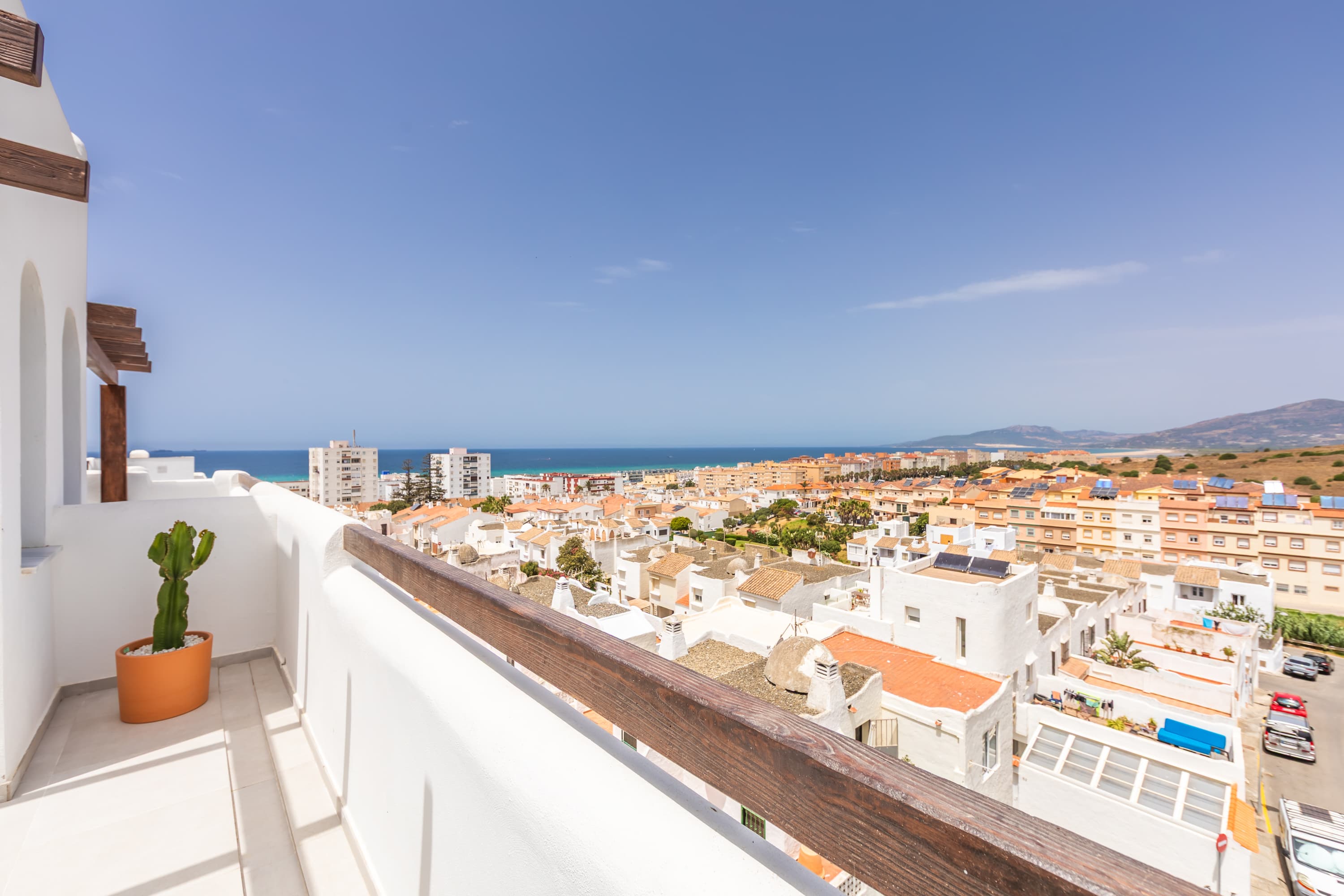
Terraza Atlántica is an apartment in Tarifa that we think captures most of what makes this place special: three terraces with views to both seas, ten minutes from the beach and the old town, and a rear terrace that faces south across the Strait to Africa. Check availability if you'd like to find out for yourself.
Come and see for yourself.
The terrace faces south. Africa on the horizon.